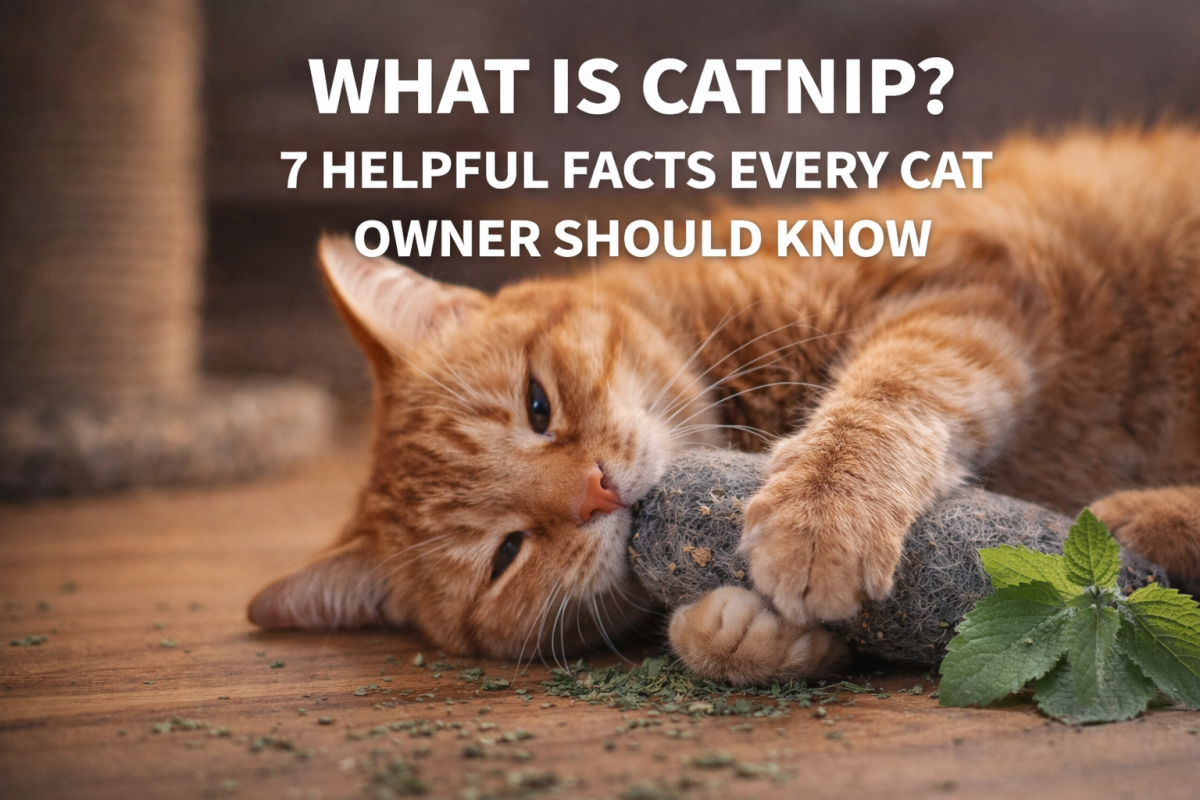
Catnip is a natural herb that affects many cats in a unique way. Some cats become playful and energetic, while others may relax or roll around.
Understanding this herb helps you make safer, more informed decisions for your cat’s daily care.
In this guide, you’ll learn what catnip is, how it works, its benefits, and whether it is safe.
How Does Catnip Work?
Catnip belongs to the mint family. It contains nepetalactone, a compound that triggers sensory responses in many cats.
When cats smell it, they may show excitement and playfulness. When ingested, the effect can be more calming.
Why Do Cats Like Catnip?
The scent interacts with receptors linked to natural feline behavior.
Common reactions include:
- Rolling and rubbing
- Increased playfulness
- Jumping or chasing
- Temporary hyperactivity
Not all cats respond. Around 30–40% have no reaction due to genetics.
Is Catnip Safe for Cats?
Catnip is generally safe and non-toxic.
Possible mild effects:
- Short-term hyperactivity
- Minor stomach upset (rare)
Use it in moderation and allow breaks between uses.
Benefits of Catnip for Cats
- Encourages exercise
- Reduces boredom
- Supports mental stimulation
- Helps with training (scratching posts, toys)
👉 Explore our cat toys collection for catnip-based products.
How to Use Catnip Properly
- Sprinkle dried catnip on toys
- Use catnip spray on scratching areas
- Offer catnip-filled toys
Start with small amounts and observe your cat’s reaction.
You can also read our guide to choosing cat toys.
Do All Cats React to Catnip?
No. Kittens usually do not respond, and some adult cats lack sensitivity.
This is normal and not a health concern.
When Should You Avoid Catnip?
Avoid use if:
- Your cat becomes aggressive
- There is digestive sensitivity
- Behavior becomes abnormal
Monitor reactions during use.
Conclusion
Catnip is a safe and useful enrichment tool when used correctly. It can improve activity, reduce stress, and enhance your cat’s environment.
Learn more from
ASPCA cat care guide.