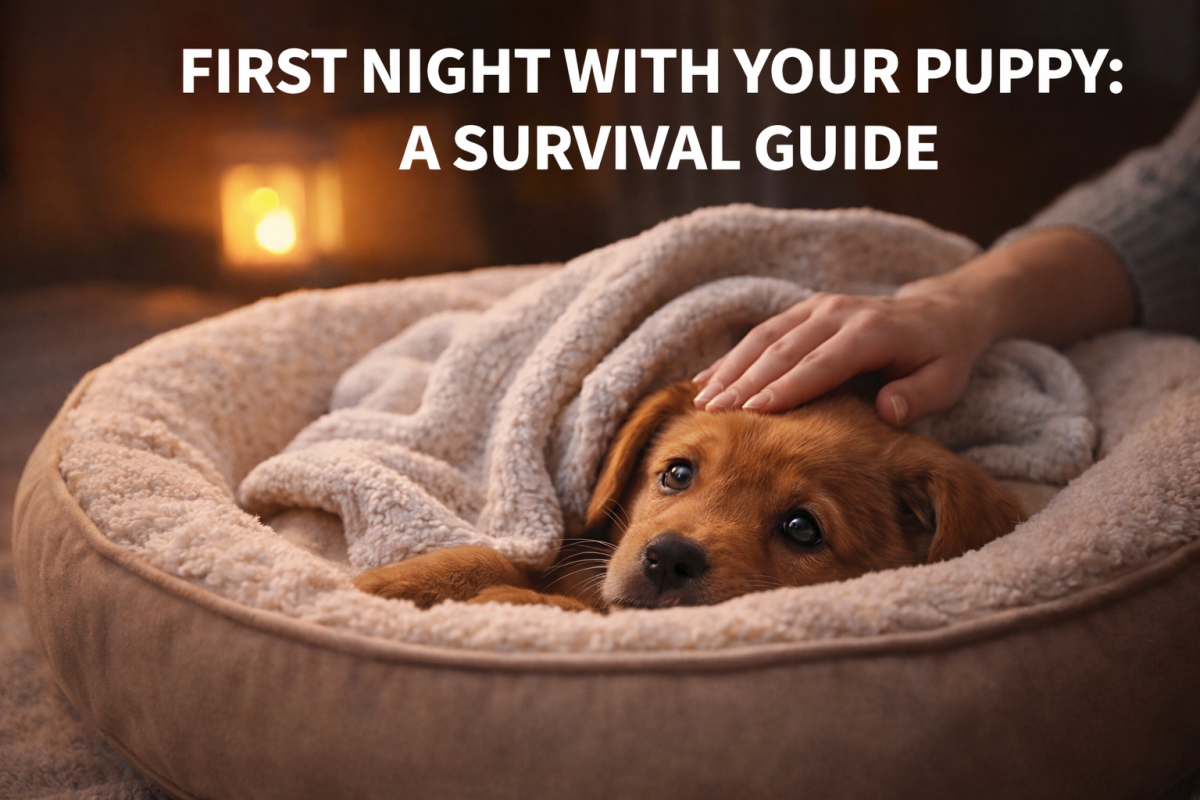
Bringing a puppy home is exciting, but the first night with your puppy can be one of the most challenging experiences for new pet owners. Many puppies feel anxious, cry at night, and struggle to sleep in a new environment.
In this FIRST NIGHT WITH YOUR PUPPY: A SURVIVAL GUIDE, you will learn exactly how to prepare, what to expect, and how to help your puppy feel safe and comfortable from the very first night.
Why the First Night with Your Puppy Matters
The first night is very important because your puppy is in a completely new environment without its mother and littermates. This sudden change can cause fear and stress.
How you handle the first night will:
- Build trust between you and your puppy
- Help establish a sleep routine
- Prevent future behavior problems
A calm and supportive approach makes a huge difference.
Preparing Before Your Puppy Comes Home
Preparation is the key to a smooth first night.
Essential Supplies Checklist
Before your puppy arrives, make sure you have:
- A comfortable crate or bed
- Puppy toys
- Food and water bowls
- High-quality puppy food
- Pee pads or access to a potty area
Having everything ready helps your puppy feel secure.
Creating a Safe Sleeping Area
Your puppy needs a quiet, warm, and safe place to sleep.
Tips:
- Use a crate or small enclosed space
- Add soft bedding
- Keep the area away from noise
- Make it feel cozy and secure
This helps reduce anxiety during the night.
What to Expect on the First Night
Don’t expect a perfect night—this is normal.
Puppy Crying and Anxiety
Your puppy may cry because:
- It misses its mother
- It feels scared in a new place
- It is not used to being alone
This is completely natural.
Sleep Interruptions
You may experience:
- Waking up multiple times
- Whining or barking
- Possible accidents
Stay patient—this phase will pass.
How to Help Your Puppy Sleep Through the Night
Consistency and comfort are the key.
Establishing a Bedtime Routine
Create a simple routine:
- Feed your puppy at the same time
- Allow some playtime before bed
- Take a final potty break
A routine helps your puppy feel safe.
Using Comfort Items
You can help your puppy feel less alone by using:
- A soft blanket
- A toy
- A ticking clock (to mimic a heartbeat)
These small things can make a big difference.
Where Should Your Puppy Sleep?
Choosing the right sleeping place is important.
Crate Training vs. Bed Sleeping
Crate Training (Recommended):
- Helps with house training
- Keeps your puppy safe
- Prevents accidents
Sleeping in Your Bed:
- Builds closeness
- But may create dependency
For beginners, crate training is usually the best option.
Feeding and Bathroom Schedule
A proper schedule helps avoid problems at night.
Nighttime Potty Breaks
Young puppies need bathroom breaks every 2–4 hours.
Tips:
- Keep lights dim
- Don’t play during potty time
- Go back to sleep immediately
This teaches your puppy that nighttime is for sleeping.
Common Mistakes to Avoid
Avoid these common mistakes:
- Ignoring your puppy completely
- Comforting every single cry
- Having no routine
- Letting your puppy roam freely
Balance is very important.
Tips from Experienced Dog Owners
Here are some practical tips:
- Stay calm and patient
- Be consistent every night
- Use positive reinforcement
- Don’t expect perfection
Your puppy is learning step by step.
FAQs About First Night with Your Puppy
1. Should I ignore my puppy crying at night?
No. Short crying is normal, but if it continues, you should gently comfort your puppy.
2. How long will my puppy cry at night?
Usually a few days to one week.
3. Can my puppy sleep alone the first night?
Yes, but placing the crate near your bed can help.
4. Should I feed my puppy at night?
No, unless it is very young.
5. How often should I take my puppy out at night?
Every 2–4 hours.
6. Is crate training safe?
Yes. It provides a safe and secure space for your puppy.
Conclusion
The FIRST NIGHT WITH YOUR PUPPY: A SURVIVAL GUIDE is all about preparation, patience, and consistency. While the first night may be difficult, it is the beginning of a strong bond between you and your puppy.
With the right setup and mindset, your puppy will quickly adjust and feel at home.